Every time you ignore an operating system update, you’re leaving your door unlocked while you sleep. It’s not paranoia-it’s math. Cybercriminals don’t break in through fancy hacks. They walk right in through old, unpatched holes that have been known about for weeks, sometimes months. And if you think you’re not a target, think again. Your phone, your laptop, your smart thermostat-they’re all part of a network that’s only as strong as its weakest link. And that link? It’s probably running software that hasn’t been updated since 2022.
There’s a reason why people search for escort vip paris and similar terms-they’re chasing something that feels exciting, immediate, and risky. But here’s the truth: real danger doesn’t come from what you click on for fun. It comes from what you ignore out of laziness. An unpatched Windows 10 machine in 2025 is like leaving your front door open in a high-crime neighborhood. The exploit doesn’t need to be clever. It just needs to exist. And it does.
Updates Aren’t About New Features-They’re About Survival
Most people skip updates because they think they’re just adding flashy icons or new emojis. That’s not what updates are for. They’re patches. They’re bandages on wounds hackers already know about. In 2024, the average time between a vulnerability being discovered and it being weaponized by attackers was 12 days. That’s less than two weeks. And if you haven’t updated in three months? You’re living in the past.
Microsoft released 117 critical security patches in 2024 alone. Google patched over 800 vulnerabilities in Android. Apple fixed 143 zero-day exploits in macOS and iOS. These aren’t minor bugs. These are backdoors. Some let attackers take full control of your device. Others let them spy on your camera, listen through your mic, or steal your passwords without you ever knowing.
What Happens When You Don’t Update?
Let’s say you’re using Windows 10 version 20H2, which reached end-of-life in December 2023. You’re still running it because you don’t want to "deal with the hassle." In 2025, that device is vulnerable to at least 18 known exploits that have active malware samples in the wild. One of them-CVE-2024-30089-lets attackers install ransomware just by sending a malicious PDF. No click needed. Just open the file. Done.
Or maybe you’re on an old Android phone. The Samsung Galaxy S8 stopped receiving updates in 2023. That means every app you install now runs on a system that can’t defend itself against modern malware. Attackers target these devices because they’re easy. They know you won’t update. They know you don’t care.
And yes, it happens to regular people. Not just corporations. A teacher in Perth got locked out of her home computer last month because a ransomware attack encrypted all her lesson plans. The attack came from an email she opened on a device that hadn’t been updated in 14 months. She lost three weeks of work. She didn’t pay the ransom. She had to rebuild everything from scratch.
It’s Not Just Your Computer
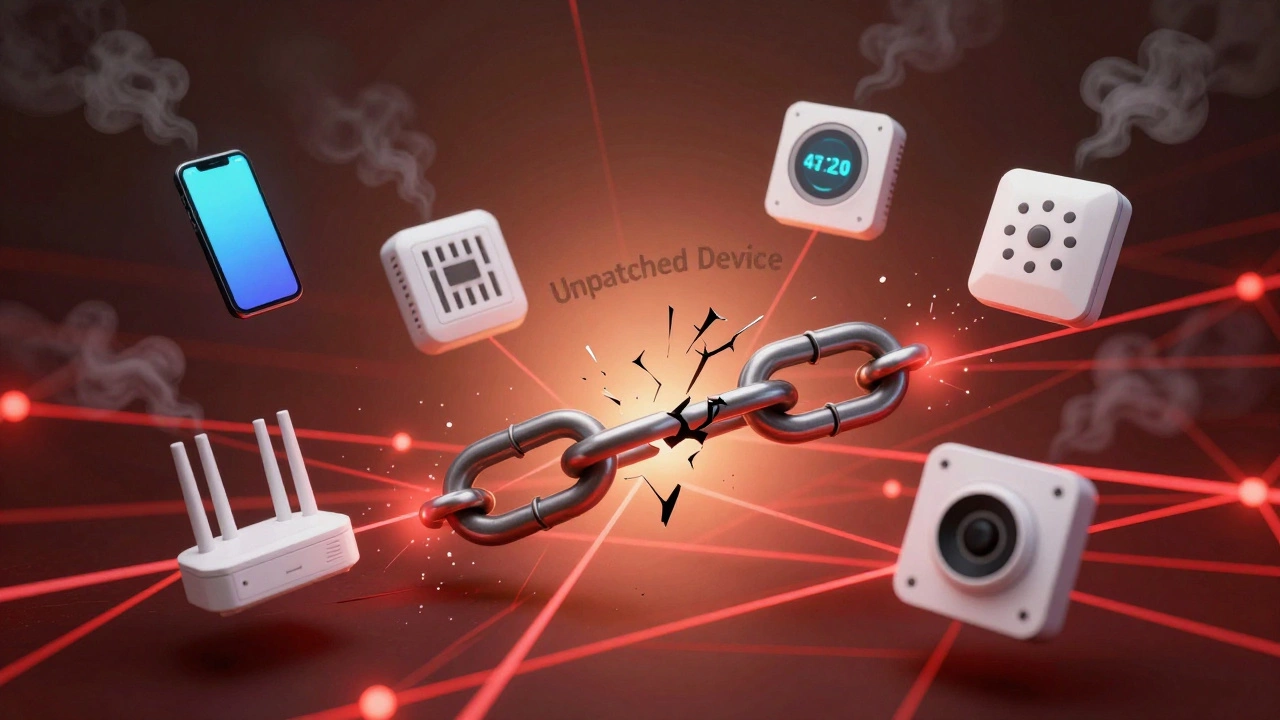
Your smart TV? Your router? Your smart lock? They all run operating systems too. And they’re even worse about updates. Most manufacturers don’t even bother pushing patches after a year. That’s why hackers are flooding the internet with botnets made of forgotten devices. A single unpatched smart camera can be turned into a weapon that takes down entire websites. You didn’t mean to be part of a cyberattack-but if you didn’t update, you are.
And yes, this connects to why people look up paris sex model or paris sex. There’s a psychological parallel. Both involve temptation. Both promise instant gratification. But one leads to a moment of pleasure. The other leads to months of pain, cost, and loss. You wouldn’t walk into a stranger’s car for a quick thrill. Why do you do the same with your software?
How to Update Without the Headache
You don’t need to be a tech expert to stay safe. Here’s how to do it in under five minutes a month:
- Turn on automatic updates. On Windows, go to Settings > Update & Security > Windows Update. Make sure "Automatic (recommended)" is selected.
- On macOS, go to System Settings > General > Software Update and check "Automatically keep my Mac up to date."
- On Android, open Settings > System > Advanced > System Update. Enable "Auto-download and install."
- On iOS, go to Settings > General > Software Update > Automatic Updates and toggle both options on.
- For smart devices, check the manufacturer’s app. If it doesn’t auto-update, replace it. There are better options.
Set a calendar reminder for the first Tuesday of every month. That’s when most major updates roll out. Spend five minutes checking if anything installed. If yes, you’re done. If no, trigger it manually. That’s it.
What If Your Device Is Too Old?
Some devices just can’t be updated anymore. If your laptop is running Windows 7, your phone is from 2018, or your router hasn’t gotten a firmware update since 2020-it’s time to replace it. You can’t patch your way out of obsolescence.
But you don’t need the latest flagship. A $300 Chromebook runs modern security updates and is more secure than most $1,200 Windows machines from five years ago. A $50 router from TP-Link or Netgear with automatic updates is safer than your aging ISP-provided box.
Don’t think of this as an expense. Think of it as insurance. Replacing a $500 laptop that gets infected with ransomware could cost you $2,000 in lost data, time, and recovery services.
Myth: "I Don’t Have Anything Worth Stealing"
This is the most dangerous lie you can tell yourself. You don’t need to have bank accounts or secret documents for hackers to care about you. Your device is a gateway. It’s a stepping stone. Once they’re in, they use your computer to attack others. They use your IP address to send spam. They use your camera to blackmail you. They use your network to mine cryptocurrency.
And if you’re part of a home network? Your smart fridge can be the entry point to your laptop. Your thermostat can be the bridge to your phone. Your router can be the tunnel to your entire digital life. You’re not a target because of what you have. You’re a target because you’re easy.
Real People, Real Consequences
A father in Melbourne lost access to his child’s medical records because his home printer-connected to the Wi-Fi-got hacked. The printer had no update mechanism. The hacker used it to get into the family’s laptop, where they found scanned prescriptions and doctor notes. He had to change every password, reset every device, and pay for credit monitoring.
A student in Brisbane had her scholarship application stolen because she clicked a phishing link on an old iPad. The device hadn’t been updated since 2021. The attacker used her identity to apply for the scholarship themselves. She lost a year of education.
These aren’t rare cases. They’re routine. And they’re preventable.
Update. Now.
There’s no excuse anymore. Updates are automatic. They’re quiet. They happen overnight. You don’t need to back up. You don’t need to cancel plans. You just need to say yes.
Open your device right now. Check for updates. Install them. Restart if needed. That’s it. You’ve just done more to protect yourself than 90% of people will do this year.
Security isn’t about being paranoid. It’s about being responsible. It’s about choosing safety over convenience. It’s about knowing that the next attack won’t wait for you to get around to it.